
Knowledge · Coaching Article
I have put together a collection of tips you can apply in your training sessions straight away. These are the best practices observed among standout table tennis coaches and inspirations drawn from publications and autobiographies of leading coaches across different sports.
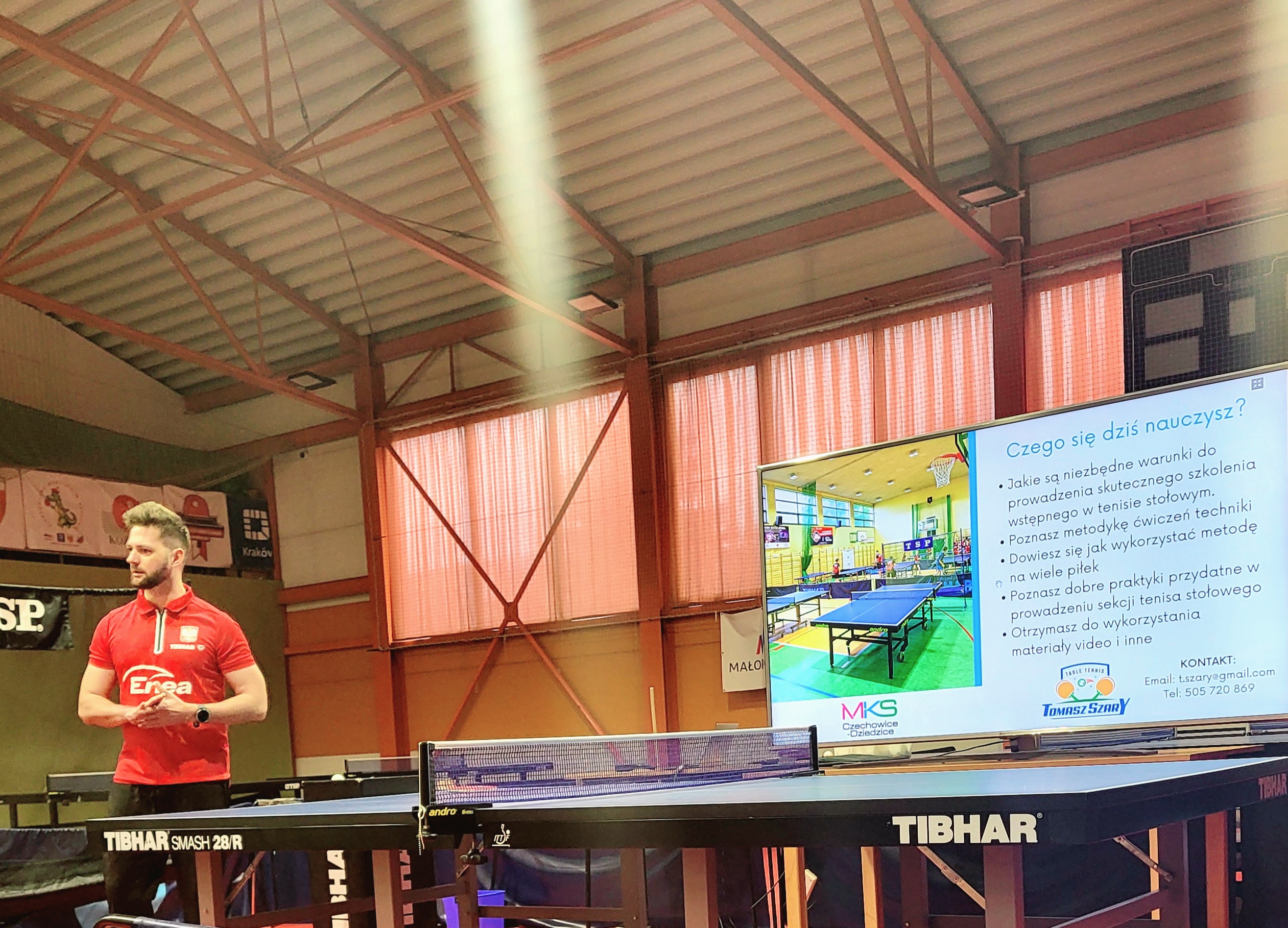
01Na treningu.
- Don't rush on to the next topics if most of the group hasn't yet mastered the current level. Solid mastery of the basics is more important than racing through the material.
- Grip and the ready stance are the foundation of the game. Even when teaching more advanced elements, regularly come back to the basics.
- Technical skills should be taught when children are attentive and focused. At those moments, cut back on games and choose the structured method.
- When you see incorrect movement patterns in your players, use simple, clear cues, e.g.: "Shorten the backswing", "Adjust your racket angle to the incoming ball", "Hit the front of the ball", "Quickly return to the ready stance".
- Take care to vary the training formats, teaching methods and use of different training aids and equipment.
- If you're aware that your own technique demonstration isn't perfect, use video materials — for example those published by the Polish Table Tennis Association.
- Encourage your players to work on their own at home — bouncing the ball, familiarisation exercises with the racket and ball, or shadow drills in front of a mirror.
- Before tackling the main topic of the session, spend a few minutes on shadow strokes or footwork drills at the table. "Dry-run" exercises significantly speed up mastering technique.
- Use the most effective methods of teaching movement: visualisation, imitation, multi-ball training, paired drills and the task-based method (competitions like "Which pair can keep the ball in play the longest?").
- As players become more advanced, make sure to select the right playing style. It's worth consulting with more experienced coaches.
- Plan training so that the intensity of exercises matches the age and level of the group. Tasks that are too difficult can lower motivation.
- Regularly switch roles during exercises — players should both perform the task and observe their partner. Learning by observation significantly speeds up development.
- End each training session with a short summary. Remind your players what they learned during the session and what they should work on themselves.
- Keep participation high during training. Avoid long queues — every child should have as much ball contact as possible.
02Trener musi się rozwijać.
- Nieustannie rozwijaj swój warsztat trenerski. Czytaj, oglądaj, analizuj, porównuj i rozmawiaj z innymi trenerami. Śledź najlepsze źródła wiedzy oraz otaczaj się ludźmi, których osiągnięcia i podejście do pracy są dla Ciebie inspirujące. Buduj zespół osób, które razem z Tobą chcą rozwijać klub lub organizację. Jeśli nie masz takiej możliwości — dołącz do środowiska ludzi o podobnych celach i ambicjach. Bierz udział w kursach, warsztatach oraz szkoleniach praktycznych. Wyszukuj również szkolenia online z dziedzin pokrewnych — przygotowanie mentalne, motoryczne czy trening fizyczny.
- Record fragments of your training sessions and analyse them afterwards. You'll notice things you can't see while leading the session.
- Don't copy other coaches' methods without thinking. Adapt the solutions to your own group, your organisational conditions and your players' capabilities.
- Develop your communication and teaching skills. Technical knowledge is important, but the ability to convey it often determines a coach's effectiveness.
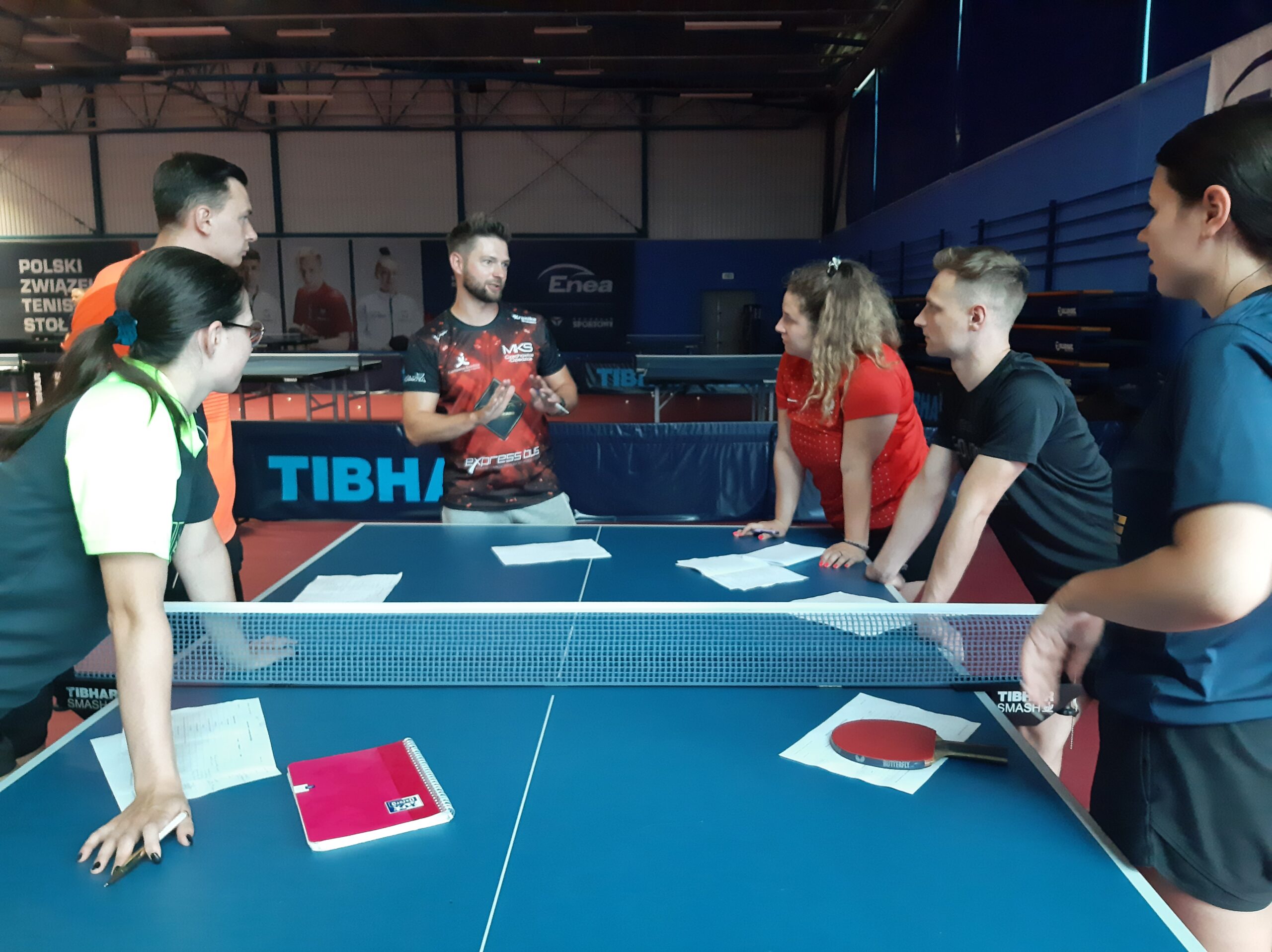
03Dbaj o komunikację.
- Take care of your relationships with your players. What you say to them matters enormously. Remember that you are first and foremost an educator, and only then a person responsible for sporting development.
- Your messages should be concrete, clear and precise. Set realistic goals for your players, suited to their abilities. Also take care of good relationships between players despite the natural sporting rivalry. Be a coach with principles — fair, respectful of every player and the time they put into the sport.
- Praise your players not only for results, but above all for commitment, consistency and the right attitude towards training.
- In conversations with parents, focus not only on the child's sporting level, but also on their behaviour, independence and social development.
- Avoid comparing players with each other. Compare a player primarily to their previous level.
- Take care of the communication culture during training and competitions. The way a coach reacts to mistakes and defeats has a huge influence on the mindset of young players.
04Organise your work
- Be well organised and prepared. Note attendance, record players' progress and keep a notebook or training planner at hand. Take care of all necessary formalities and stay up to date with legal changes concerning the organisation and conduct of sports coaching.
- Before the season, organise meetings with parents and players where you present the plans, goals, training schedule, fees and how things will be run, and answer their questions. These meetings significantly improve cooperation later on.
- Prepare your training plan before you enter the hall. Good organisation builds the coach's authority.
- Always have a backup plan ready in case of lower attendance, organisational problems or a limited number of tables.
- Be punctual — both yourself and with your players. Consistency and respect for time are an important part of the sporting work culture.
- Keep records of your players' progress. Regular notes help to plan the coaching process more effectively.
★Summary
- A good table tennis coach doesn't only teach technique and tactics. They are also an educator, an organiser, a mentor and an example for their players.
- Remember that the biggest impact on a player's development comes from small daily actions, the way you communicate, and the atmosphere you create during training.
The most important foundations of effective coaching are:
- patience,
- consistency,
- perseverance,
- the ability to build relationships,
- continuous development,
- good work organisation,
- a passion for sport and teaching.